Vulgar economics in the c-suite and boardroom.
The DLMA Matrix(pronounced dilemma)
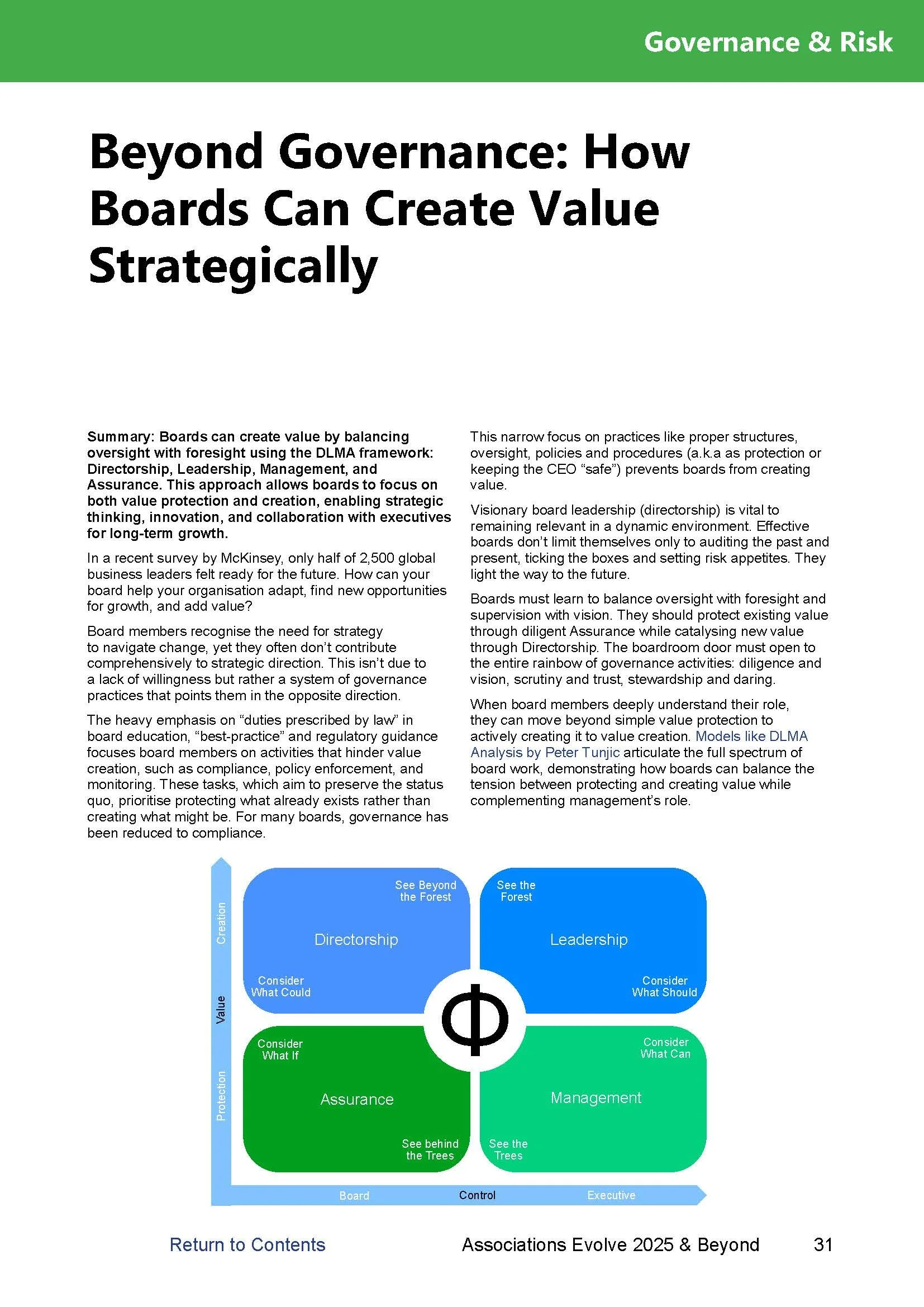
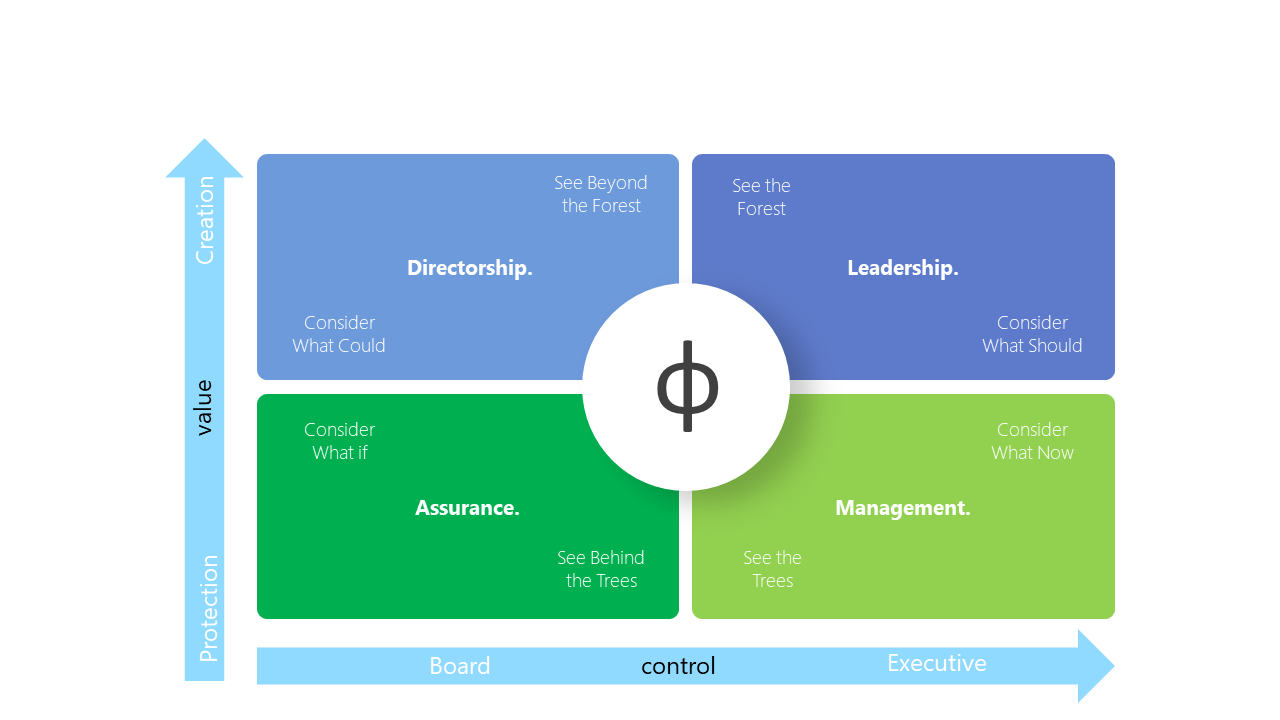
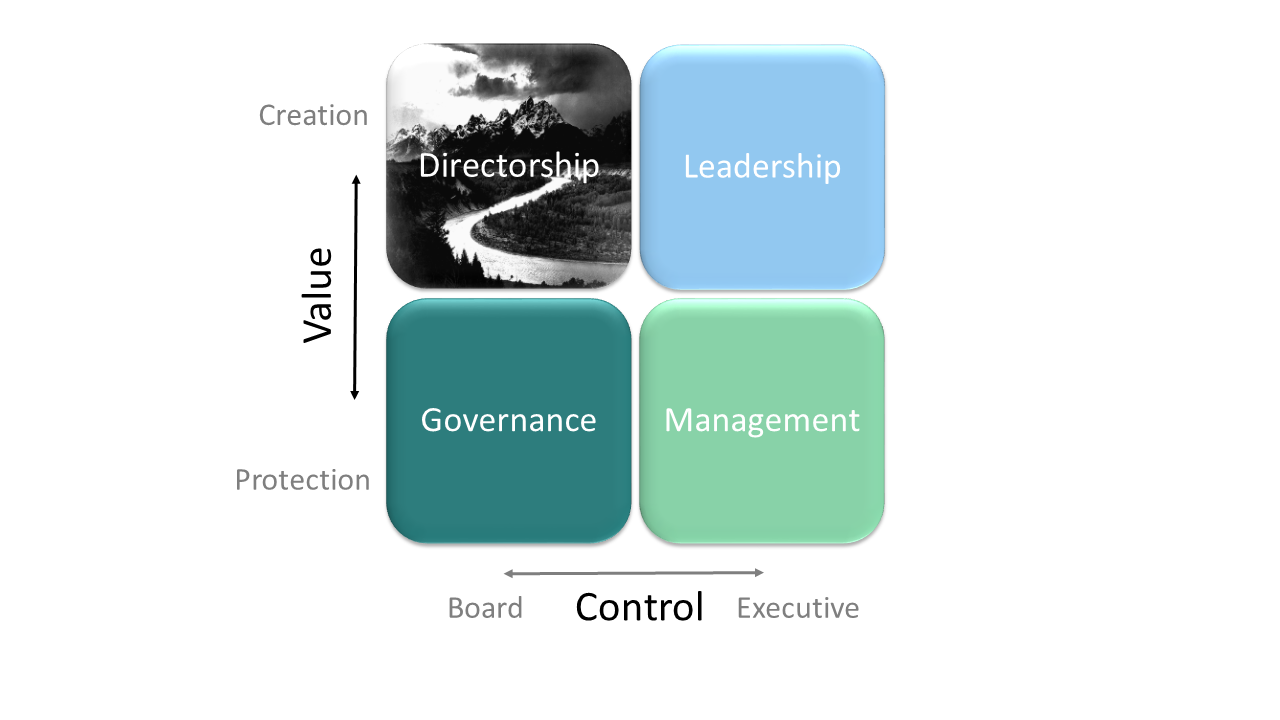
The DLMA framework helps improve performance by matching the goals of value creation and value protection to the top four roles in a company:
Directorship, Leadership, Management and Assurance (governance)
Grant Thornton UK describes DLMA Thinking this way:
It is a simple yet powerful tool which provides a framework with which to evaluate how well an organisation is performing regarding the balance of skills, understanding of roles and responsibilities between the executive and Board and the alignment between the balance of energies between risk (value protection) and opportunity (value creation) and the overarching strategy and purpose.
Likened to De Bono’s hats for the boardroom and c-suite, DLMA thinking breaks the three unbreakable rules of corporate governance:
Exposing the contradictions at the core of director education and providing a much needed new direction in directing.
First created by Peter Tunjic in 2012, Managing Director of Better Boards Australasia, Raph Goldworthy explains why DLMA matters:
Don’t become trapped in governance as compliance. DLMA provides a framework for the partnership between the board and executive. It highlights the different “hats” board members wear, giving us a framework to think clearly about the doing of being a board member. Allowing a synergy to drive strategy, innovation and growth. While also putting guardrails and accountability in place. Use the different roles of DLMA to help your board to be strategic about how it protects and creates value.