economics and COMPANY Law returned to the dirt, reason and to their elemental and practical purpose - to realistically explain what we thought we already knew
how To SUPPLY the resources required For a nation to live well.

Mistaken by Adam Smith for a hand, do we have the providential butt hole to thank for capitalism and the virtuous substituition by individuals and corporations of end products?
Thanks for the image Denny Müller@redaquamedia
inspired by the basest of all forms of human production - shit - Vulgar economics is the study of MARKETS and VALUE IN USE.
The purpose of Vulgar ECONOMICS is to better understand the two most important forms of value:
VAlue in use. the human form of value necessary for OPTIMAL SOCIAL PROVISIoNInG; and
Counter VAlue. the inhuman form of value responsible for Spiralling SOCIAL DECAY.
The OBJECTIVE of VULGAR ECONOMICS is to use science to explain the existence and Mechanics of USEFULNESS:
How DO individuals, corporations, and governments harness available and accessible capitals to generate energy in its social form -value - The irreducible currency of well-being and a good life.
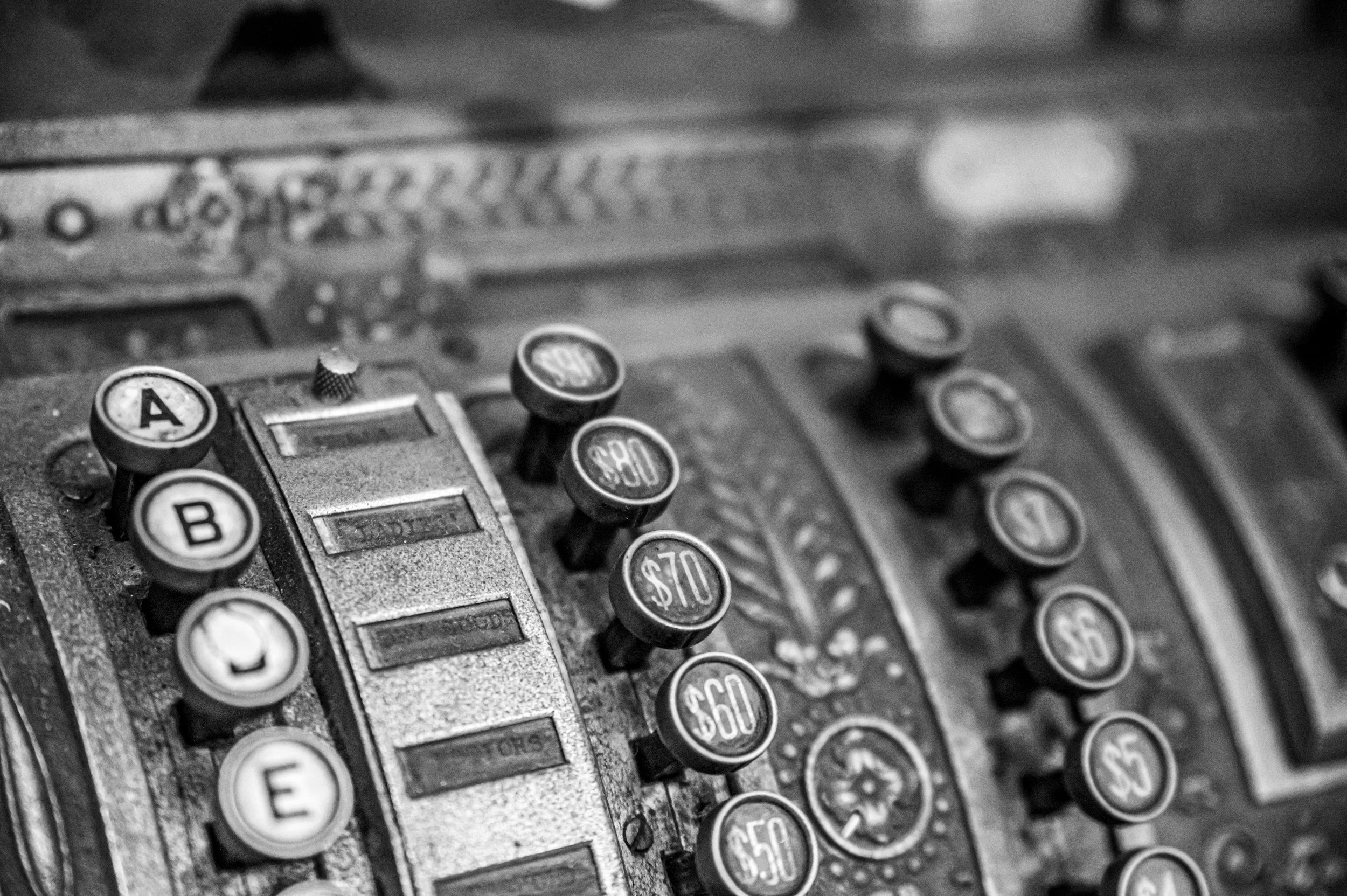
The Art of the Deuce or Why We Sell What We Sell
Traditional economists ask why we do buy what we buy, Vugar economists ask why do we sell what we sell.
Consider Say’s unspoken second law states that the act of producing a good or service that cannot be used by the producer (an “unwant” the economic equvalent of bodily waste) creates an overwhelming urge to supply and sell that unwanted thing.

Why Markets Abhor a Gradient
The vulgar market is the real and visceral market. An ignoble co-ordination device in which producers exchange their unwanted goods, services and income based on the utility of an unmistakable gamble of non bodily excreta.
Consider the the double co-incidence of unwants.
Learn how disequilibria on bothsides of the market produces a gradient along which the unusable will tend to flow to where it is useable and more likley to be used.
A stunning concept that can explain how resouces are allocated to where they are more useful.

Why We Win Some But Risk Losing It all
Why does maximising profits for a firm’s shareholders while operating within the bounds of open and free competition, without deception not also increase social welfare when measured in terms of the availability and accessibility of socially useful things
How can useful things be in decline in the world if the market is so good, just, powerful and efficient?
Learn a new word "ecodicy" or how economists vidicate the providence of the invisible hand in view of ecosystem collapse.
Nature Loves to Hide where Your Eyes Can’t See
Vulgar economics is the unconventional study of the most important question of our times:
If supply and demand is failing to provide the essentials, is there an undiscovered law that explains the production, distribution, and transformation of everything useful and required for a good life?
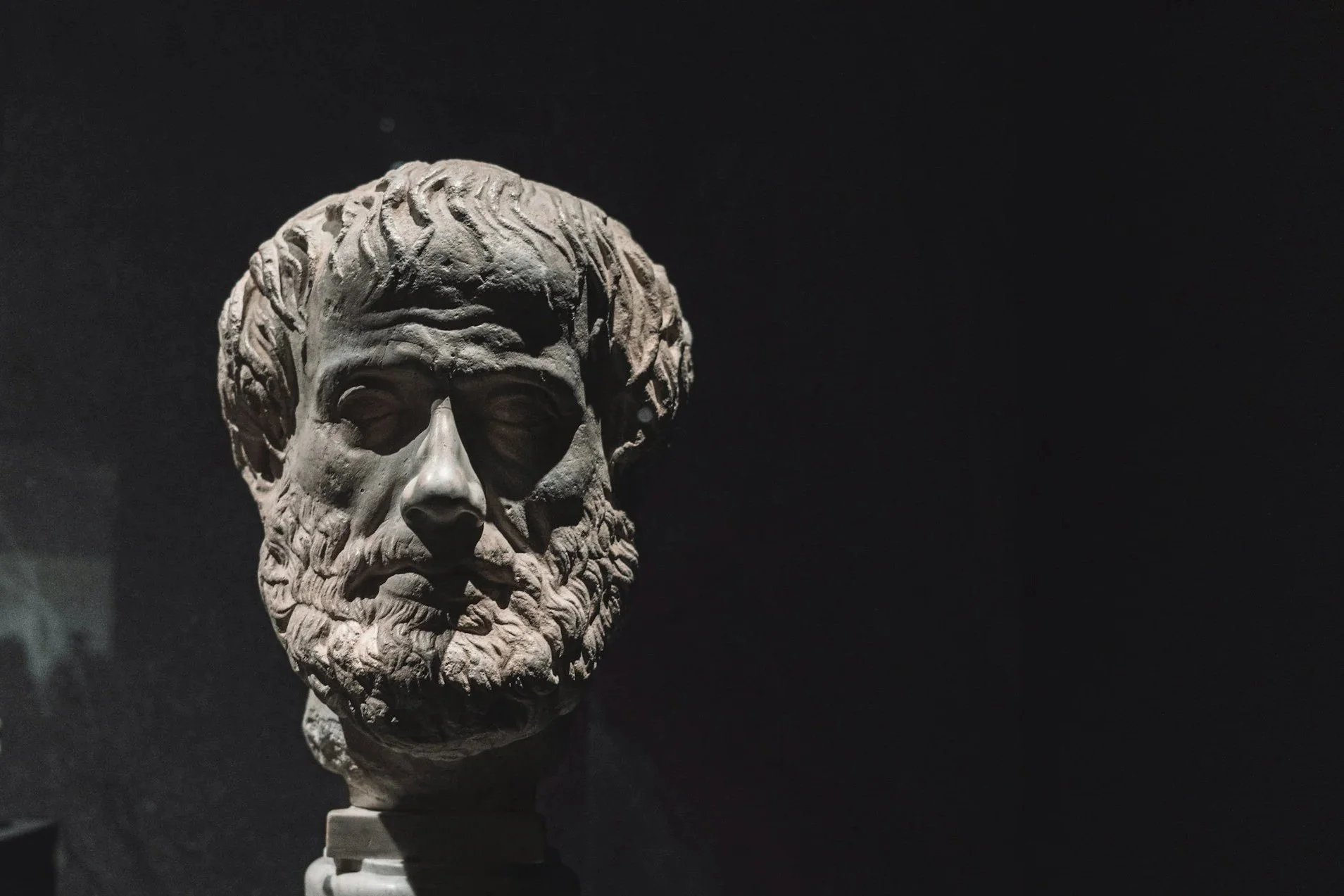
Grounded in Aristotle’s concept of value in use, vulgar economics can also be described as a proto-classical theory of value.
Earthy, visceral and deeply organic, vulgar economics is concerned with optimal social provisioning (the human and natural form of value) rather than prices and profits (the inhuman and unnatural form of value).
If mainstream economics starts with the idea of what individuals and corporations want, vulgar economics starts from the opposite and largely unexplored other side of the equation:
Why do individuals and corporation produce things they don’t want for themselves and what does that means for the future of the planet?
But why call it vulgar?
Because it is not grounded in the capitalist law of value- the ideal of supply and demand - but the law that governs life - entropy and the production of shit. The essential process and building block of ecosystems and societies and the means of growth.
Inspired by physics and biology, vulgar economics is an objective theory of value based on the unsettling relationship between individual excrement and collective growth. Natures best hiding place is behind us.
Fom an energy perspective, kaka, cash and commodities all share a common characteristic. Each a store of left over energy/value generated through consumption and production of resources that can’t be further absorbed and used by the producer. Described as the producer’s waste product because the energy and value in use is unavailable and inaccessible for use by the producer. That it is useful to someone else does not alter the relationship between the producer and its shit. It is this entropic property that makes capitalism possible and is core to solving the problem of social provisioning.
Vulgar economics is based on the insight that, in a market based economy, societies are supplied with the human form of value - value in use or usefulness, based on the counter-intutive production and exchange of the opposite - things the producer can’t use - the metaphoric equivalent of unuseable poop that must be voided. The product making its way through the market to where it can be used and is useful.
The force that most shapes the economy is not psychological, historical, structural or systemic. It is the metaphoric imperative to shit that ultimately produces social welfare without appealing to higher moral obligation or lower human desire and passion. If nature loves to hide, it’s best hiding spot is directly behind us.
A key tenet of vulgar economics is the existence of an immutable law of supply. A billion year old organising principle that compels the dispatch of unusable production to the market in the same way that a bear is compelled by nature to dispatch it’s shit to the woods. A primordial force that triggers the mutual flow of things from where they are unusable to where they are useful and more likely to be used to perfom socially useful work.
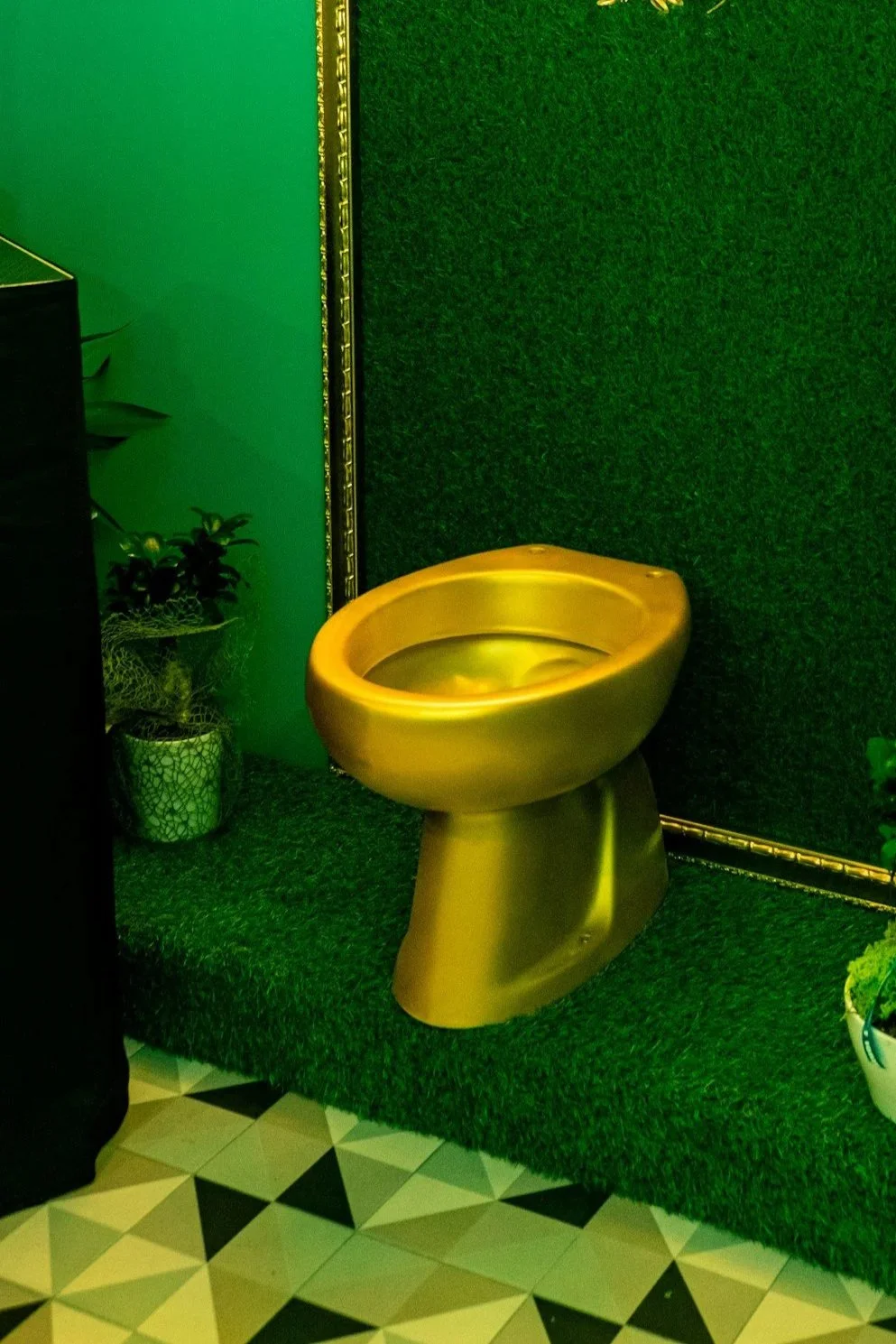
Are markets entropic engines powered by waste?
Humanity’s most embarrassing organ and most reviled, worthless and terminal product, the more apt metaphors for the unseen market forces that govern economies and the supply of useful things.
Overwhelmed by the urge to purge what they have created but cannot use, producers of commodities and incomes have little choice but to export the unwanted product of their industry in the hope that someone else has done the same, but in reverse. The market bringing the least valued (the unwant or refuse) and the most valued (the want or desire) into the intimate relationship of exchange.
Countless “invisible ani” guided by the “call of nature” drawing individuals and corporations into market relations, which in turn, means that the things that each has no use for, but the other does, flows to where it can be put to use.
The mutual or double coincidence of unuseable unwants the necessary precursor to the double coincidence of useable wants. The former governed by physics and the principle of disequilbrium and the later governed by desire and equilbrium.
Though unknown to the sanitised, and largely impoverished neoclassical theory of exchange value, this dirty theorem has the power to explain how value in use is generated and distributed. The never ending need to separate ourselves from our unusable, and therefore useless shit promoting social purpose through the dissipation of energy in its social form - value in use or what I call “phi” - without social responsibility or obligation. Society benefiting from the collective imperative to metaphorically poo, more so than the psychology of individual greed.
This is economics returned to the dirt, reason and to its elemental and practical purpose - to realistically explain how societies are continually supplied with all the resources required to live well.

Not that you will see this entropic mechanism for socally efficient distribution of usefulness described in any economic textbook. Attracted to the sterile, linear and methodologically infallible idea that all value is value in exchange generated through supply and demand:
the virtuous similarity between kaka, cash and commodities has long gone unnoticed and unexamined; and
the relationship between increasing exchange value and decreasing value in use has long gone unexplained.
By focusing on demand and wants, economists have missed the fundamental and practical truth that all exchange is based on the double co-incidence of the supply of unwanted things or unwants. We must all produce things we don’t want or can’t keep, in order for exchange to occur and for capitalism to continue to function. Fated, in the extreme and by excess, to never be satiated by what we produce ourselves and to only be satisfied by consuming the unloved and unwanted product of another.
The two truths of neo-classical economics is that profits and GDP can go up at the same time as value goes down. A paradox that breaks the hold of economics on policy making by forcing politicians and regulators to confront conventional thinking versus the reality of collapsing usefulness.
The end game summed up by Jason Hickel and Yanis Varoufakis:
So we end up with irrational forms of production as a result: we get massive production of things such as SUVs, mansions and fast fashion, because these things are highly profitable to capital, but chronic underproduction of obviously necessary things like affordable housing and public transit, because these are much less profitable to capital, or not profitable at all.
The resolution to the two truth is to find a universal measure of equivalence between all forms of capital in the last place any economist would look. To a vulgar economist, the answer to what is produced, how, and for what purpose is not so much staring us in the face as it is hidden by our arse.
About the Vulgar Economist
The Vulgar Economist is a long term project to explain the economic phenomenon of usefulness, define the domain of problems associated with it, solve or at least propose solutions to one or more of those problems and be among the first to formulate a decision model based on the concept of value in use.
The project is possible because of the support provided by Tunjic Legal and Commercial Pty Ltd.